Best Burr Coffee Grinder for Home Espresso
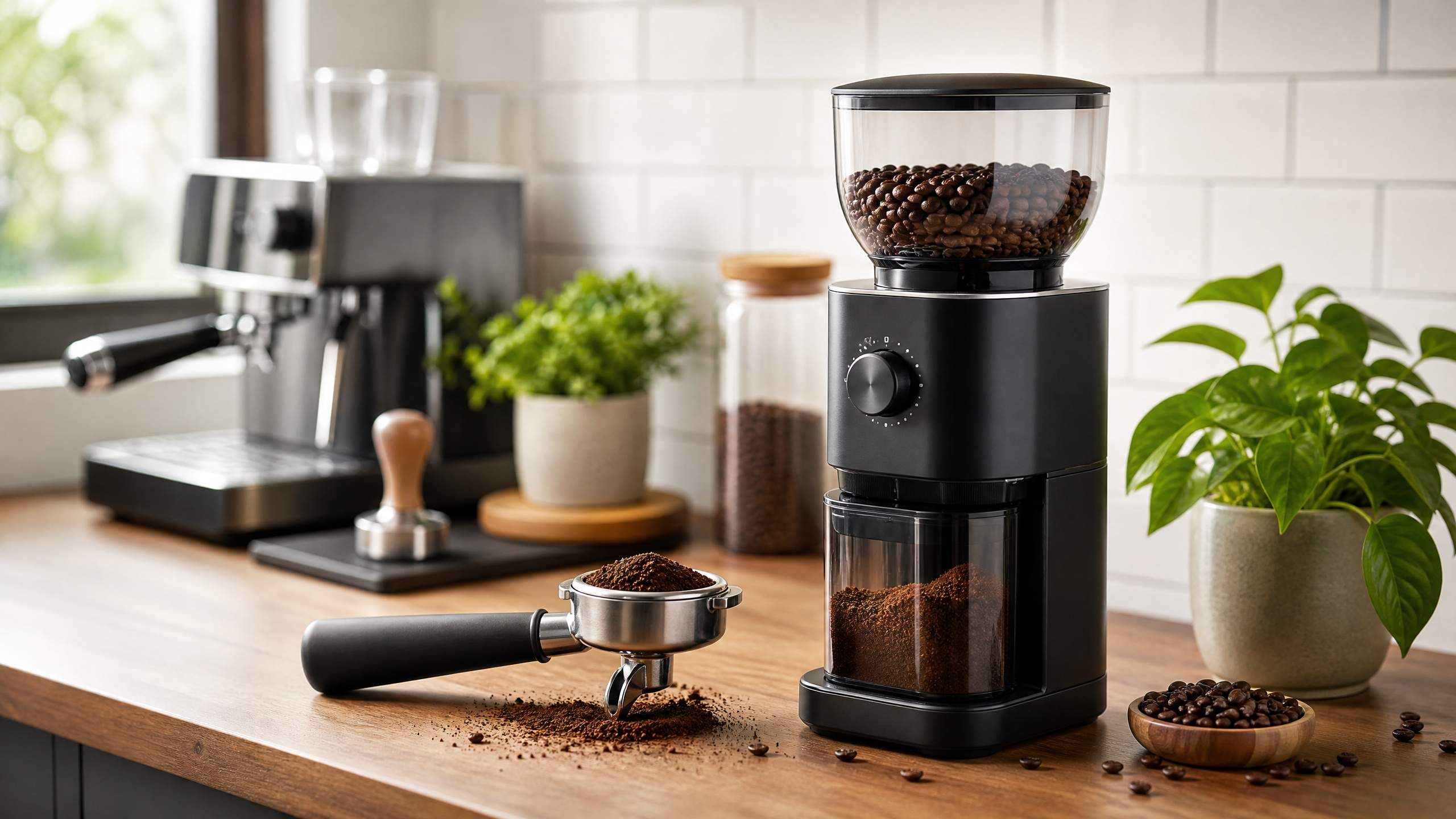
Why the Grinder Is the Missing Link in Your Espresso Workflow
When you pull a great espresso shot, the spotlight often shines on the machine, the water temperature, and the tamp. Yet the first, and arguably most critical, control point is the grind. A consistent, uniform particle size gives the water a predictable path through the coffee puck, allowing you to dial in dose, pressure, and time with confidence. For a home espresso enthusiast, the grinder is the bridge between raw beans and the final crema. Selecting the right burr grinder therefore isn’t just a purchase—it’s a strategic upgrade to the entire workflow.
1. Grind Consistency: Flat‑Burr vs. Conical‑Burr
The ultimate espresso metric is the uniformity of particle size. Laboratory‑grade laser diffraction studies show that steel‑flat‑burr grinders such as the Mazzer Mini and Eureka Mignon Specialita typically achieve a particle‑size standard deviation of 5‑8 µm. Conical‑burr models, like the Baratza Sette 270, usually sit in the 8‑12 µm range. The tighter tolerances of flat burrs translate to more repeatable shot times and a steadier flavor balance.
Modern conical designs have closed the gap, however. The Sette 270’s “straight‑path” grind reduces friction and heat buildup, preserving aromatic oils that can otherwise evaporate in a hot burr housing. In practice, a well‑calibrated conical grinder can match or even exceed the consistency of a mid‑range flat‑burr, especially when the user takes the time to dial in the grind and monitors dose with a scale.
Bottom line: flat burrs win on pure consistency, but conical burrs often win on speed, lower retention, and heat management. Your choice should reflect which factor matters most in your daily routine.
2. Dosing Precision: Weight‑Based Grinding Beats Timing
Espresso dosing typically lands between 18‑20 g for a double shot. A variance of just ±0.2 g can swing the brew ratio enough to alter perceived acidity or bitterness. Grinders equipped with load‑cell scales—most notably the Niche Zero and the Lido 8—let you set a target weight and stop automatically. This eliminates the extra step of weighing a portafilter after grinding, streamlining the workflow for multiple consecutive shots.
Older grinders rely on manual dosing knobs, which require a separate scale and introduce human error each time you adjust. If you value speed and consistency, a grinder with built‑in dose‑by‑weight functionality is a clear advantage.
3. Retention, Speed, and Heat Management
Retention is the amount of coffee that stays trapped in the burr housing after a grind. High retention (1‑3 g) can mix stale grounds with fresh ones, muting bright notes and adding bitterness. Low‑retention models like the Niche Zero claim less than 0.5 g, a figure confirmed by several third‑party tests.
Speed is equally important. A grinder that delivers a 20 g dose in 2‑3 seconds keeps bean temperature low, preventing heat‑induced flavor loss. Seattle Coffee Gear’s 2024 comparison recorded the Niche Zero at 2.8 seconds per dose, while the Baratza Sette 270 clocked in at roughly 3.2 seconds. Faster grinding not only preserves aroma but also reduces the time you spend waiting between shots—a practical benefit for home baristas who like to experiment.
4. Build Quality, Serviceability, and Warranty
Durability matters because a grinder is a daily workhorse. Stainless‑steel burrs, hardened‑aluminum housings, and modular burr kits extend a machine’s lifespan. The Mazzer Mini offers a 5‑year warranty and a global service network, making it a solid long‑term investment for serious enthusiasts. In contrast, the Baratza Sette series carries a 2‑year warranty but benefits from an extensive aftermarket, with spare burrs and motor components readily available.
Modular burr sets provide an upgrade path without replacing the entire grinder. Upgrading from a 65 µm to a 45 µm burr set can sharpen grind resolution for espresso without a new purchase—a cost‑saving angle for hobbyists who like to fine‑tune.
5. Noise Level and Countertop Footprint
Noise can be a deal‑breaker for apartment dwellers. The Sette 270 averages 72 dB at full speed, while the Niche Zero sits around 68 dB thanks to its sound‑absorbing housing. Both are quieter than many traditional flat‑burr machines, but the conical designs generally win on volume.
Space constraints are another practical consideration. The Lido 8 measures 340 mm in width, comfortably fitting on a standard 600 mm kitchen counter. The Mazzer Mini, however, often requires a dedicated base or a cabinet shelf due to its larger footprint (approximately 420 mm wide and 550 mm tall). When evaluating a grinder, compare the machine’s dimensions to your available countertop or cabinet space to avoid a frustrating fit‑issue later.
6. Common Misconceptions Debunked
More Expensive ≠ Better Espresso
Price correlates with build quality and features, but a well‑tuned mid‑range conical grinder can outperform a premium flat‑burr in consistency. The key is calibration and repeatability, not the price tag alone.
Burr Size Is the Sole Quality Indicator
Burr geometry, grind path, and motor torque all shape the particle distribution. A 64 mm flat burr can be outperformed by a thoughtfully engineered 55 mm conical set that delivers a cleaner grind path and less heat.
Built‑In Timers Replace Scales
Timing a grind is less reliable than weighing it. A scale under the portafilter gives you direct feedback on dose, whereas a timer can be thrown off by bean density variations and grind speed fluctuations.
7. Buying Guide: Matching Grinder Specs to Your Espresso Setup
Use the following checklist to align a grinder with your existing equipment and kitchen constraints:
- Desired grind consistency: Choose flat‑burr if you need the tightest particle‑size distribution; opt for conical if you value speed and lower retention.
- Dosing workflow: If you prefer a seamless, weight‑based process, target grinders with integrated load‑cell scales (Niche Zero, Lido 8).
- Retention tolerance: Aim for <0.5 g retention to avoid stale‑ground contamination.
- Noise sensitivity: Conical models generally stay under 70 dB, making them apartment‑friendly.
- Space availability: Measure your countertop width and height; models like the Lido 8 fit standard kitchens, while the Mazzer Mini needs dedicated space.
- Budget ceiling: Flat‑burrs often start around $800‑$1200 (e.g., Mazzer Mini). High‑quality conical options like the Sette 270 sit in the $500‑$650 range, offering strong performance for a lower price.
- Service and warranty: Longer warranties and robust service networks reduce long‑term risk.
By treating the grinder as the first control point in your espresso workflow, you’ll find that the downstream variables—tamping pressure, water temperature, and shot timing—become easier to master. The right grinder not only delivers a consistent grind but also streamlines the entire brewing process, turning a hobby into a repeatable craft.
8. Recommended Models for Different Scenarios
Flat‑Burr Powerhouse – Mazzer Mini: Ideal for users who prioritize the tightest grind consistency and have the space for a larger machine. Offers a 5‑year warranty and a global service network.
Speedy, Low‑Retention Conical – Niche Zero: Excellent for kitchen‑counter setups where noise and retention matter. Integrated load‑cell scale simplifies dosing.
Hybrid Performance – Baratza Sette 270: Balances speed, reasonable consistency, and a compact footprint. Good for budget‑conscious enthusiasts willing to fine‑tune.
Versatile Mid‑Range – Lido 8: Combines flat‑burr precision with a built‑in scale, fitting comfortably on most countertops while delivering low retention.
Each of these grinders aligns with a different set of priorities. Evaluate the checklist above, consider your kitchen layout, and choose the model that becomes the most logical “missing link” in your espresso chain.
Conclusion
The best burr coffee grinder for home espresso isn’t a one‑size‑fits‑all answer; it’s the grinder that completes your espresso workflow. By understanding grind consistency, dosing precision, retention, build quality, noise, and space, you can select a machine that delivers the fine, uniform particle size you need while fitting seamlessly into your kitchen and budget. Armed with this knowledge, the next time you pull a shot, you’ll know the grinder played its part perfectly—from the first bean to the final crema. Check it out here.
If you would rather skip the standalone grinder altogether, the Thyme & Table Barista Grade Espresso Machine with a built-in conical burr grinder folds both steps into one machine.
As an Amazon Associate, we earn from qualifying purchases.