Carbon Steel vs Cast Iron: Which Pan Grows With Your Cooking Skills
Introduction: The Pan That Grows With You
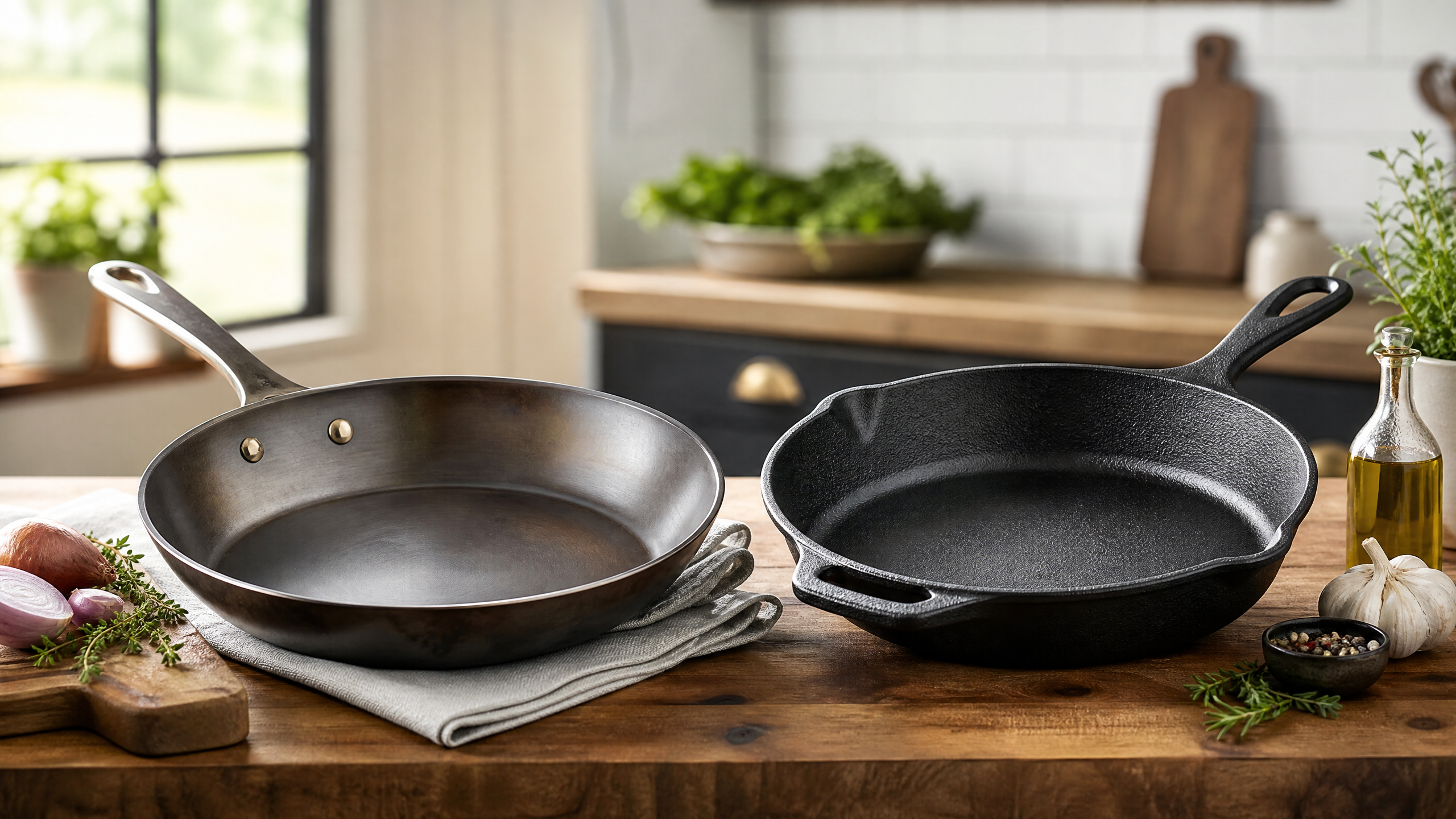
When you first step into a kitchen, the choice of skillet can feel overwhelming. Two heavyweight contenders—carbon steel and cast iron—are constantly compared, but the debate often stops at "which is better?" In reality, the answer depends on where you are in your culinary journey. A lighter, quicker‑responding carbon‑steel pan can be the perfect starter tool, while a heavyweight cast‑iron skillet shines once you’ve mastered seasoning and need steady heat for slower‑cook dishes. This guide walks through the practical differences, debunks common myths, and helps you pick the pan that will adapt as your cooking confidence evolves.
Heat Transfer: Speed vs. Inertia
Carbon Steel’s Rapid Responsiveness
Carbon steel’s thermal conductivity sits around 50 W/m·K, roughly double that of cast iron. On a typical stovetop, a 10‑inch carbon‑steel skillet reaches the desired temperature 30‑40 % faster than its cast‑iron counterpart. The result is a pan that reacts instantly to temperature adjustments—a crucial advantage for high‑heat searing, quick stir‑fry, or delicate dishes like pancakes and crepes where a few seconds of over‑cooking can ruin the texture.
Cast Iron’s Thermal Inertia
Cast iron, with a conductivity near 30 W/m·K but a much greater mass, excels at heat retention. Once heated, it can hold a steady temperature for 15‑20 minutes even after the burner is turned off. This property makes it ideal for braising, skillet‑to‑oven recipes, and achieving a uniform sear on thick cuts of meat. The downside is a slower warm‑up period, which can feel cumbersome for rapid‑turnaround meals. Check it out here.
As an Amazon Associate, we earn from qualifying purchases.
For the average home cook who flips between quick sauté and occasional oven finish, the decision hinges on whether you prioritize speed (carbon steel) or the steady heat reservoir (cast iron).
Seasoning, Non‑Stick Development, and Ongoing Maintenance
Building a Patina on Carbon Steel
Both metals develop a polymerized oil layer—commonly called a "seasoning"—that creates a natural non‑stick surface. Carbon steel’s thinner profile absorbs oil more readily, reaching a uniform, deep‑black patina after just three to five seasoning cycles. The resulting surface can be as slick as a well‑seasoned cast‑iron skillet, but the thinner metal is also more vulnerable to rust in humid environments. A quick wipe‑dry after each use and a light coat of oil are essential to keep rust at bay.
Cast Iron’s Deep‑Set Seasoning
Cast iron’s porous micro‑structure traps oil deeper, forming a robust seasoning that tolerates occasional neglect. If the seasoning is stripped—by harsh detergents or prolonged soaking—the entire surface must be re‑seasoned, which is a more labor‑intensive process than the quick touch‑up routine typical for carbon steel.
Myth‑Busting the Soap Rule
Many still hear the warning, "Never wash cast iron with soap." Modern culinary experts agree that a brief, mild soap rinse is acceptable, provided you dry the pan immediately and apply a thin oil layer. The myth persists because older advice emphasized avoiding any detergent to protect the seasoning, but today’s seasoned pans are resilient enough to handle a quick clean.
Weight, Handling, and Ergonomics
A standard 10‑inch carbon‑steel skillet weighs between 1.5 and 2 lb, whereas a comparable cast‑iron skillet tips the scales at 4‑5 lb. The lighter carbon steel reduces wrist fatigue during prolonged stirring, flipping, or tossing, making it a better match for users with limited arm strength, college students, or anyone who values nimble maneuverability. Cast iron’s heft, however, provides a rock‑solid base that resists wobble on uneven stovetops—a notable advantage for outdoor cooking or older kitchens with uneven surfaces. The weight also contributes to a "solid feel" that many professional chefs associate with confidence and control.
Cost, Availability, and Longevity
Carbon‑steel pans typically range from $30 to $70 for a 10‑inch model, sourced from manufacturers in Japan, China, or Europe. Cast‑iron skillets span a broader price spectrum: a basic domestic brand may start at $25, while premium pre‑seasoned options such as those from Le Creuset or the Lodge 10‑inch pre‑seasoned cast‑iron skillet can climb to $120.
Both materials can last decades with proper care. Carbon steel is more prone to warping if subjected to rapid temperature changes or if lower‑quality alloys are used. Cast iron tolerates thermal shocks better due to its thickness but can crack if dropped. When evaluating cost‑benefit, consider how often you’ll cook, your willingness to perform routine maintenance, and the importance of weight in your daily routine.
Cooktop Compatibility and Oven Use
Carbon steel works on gas, electric, and induction stovetops (provided the base is magnetic) but cannot be used in microwaves and may warp on some induction plates if the base isn’t fully compatible. Cast iron is a universal champion—it works on all stovetops, including induction, and can safely transition from stovetop to oven at temperatures up to 500 °F (260 °C). For recipes that finish with a high‑heat broil or require a frittata baked in the skillet, cast iron holds a clear advantage.
The Evolving Skill Set Narrative
Think of skillet selection as a progression rather than a static choice. Beginners often benefit from carbon steel’s quick heat response and lightweight handling. The fast warm‑up means less waiting time, and the ease of maneuvering encourages experimentation with stir‑fry, sauté, and pan‑seared dishes. As confidence builds and seasoning becomes second nature, many cooks graduate to cast iron to leverage its superior heat retention for braises, oven‑finished meals, and the comforting "cast‑iron sear" that many home chefs crave.
This evolution mirrors real‑world scenarios:
- College student in a dorm: Limited storage space and a desire for fast meals make a 10‑inch carbon‑steel skillet ideal for weekday stir‑fry or quick breakfasts.
- Young professional with a small kitchen: After mastering seasoning, the same cook might add a cast‑iron skillet for weekend roasts, skillet‑to‑oven dishes, and the ritual of cooking on a heavy, heat‑stable surface.
- Family cook with an outdoor grill: Cast iron’s weight and durability make it perfect for campfire cooking, while a lighter carbon‑steel pan remains handy for quick sauté on a portable stove.
By viewing the two pans as complementary stages, readers avoid the false dichotomy of "best overall" and instead choose a tool that fits their current needs and future aspirations.
Buying Guide: What to Look For
Carbon Steel Checklist
- Thickness: 1.5‑2 mm for balanced responsiveness and durability.
- Magnetic base if you plan to use induction.
- Pre‑seasoned vs. raw: Pre‑seasoned saves time, but raw offers a chance to build your own patina.
- Handle material: Metal handles stay cooler than wooden ones during high‑heat searing.
Cast Iron Checklist
- Pre‑seasoned vs. enameled: Enameled eliminates seasoning maintenance but reduces the ability to build a natural non‑stick surface.
- Weight tolerance: Ensure you can comfortably lift the skillet, especially when it’s full of food.
- Rim shape: Flared rims aid in tossing, while straight rims provide a larger cooking surface.
- Oven rating: Verify the handle material can handle your typical oven temperature.
Conclusion: Choose the Pan That Grows With You
Carbon steel and cast iron each have distinct strengths—speed and agility versus heat mass and durability. The "best" pan isn’t a static label; it’s the one that aligns with your current cooking style, kitchen constraints, and willingness to maintain the surface. Start with a carbon‑steel skillet for quick, responsive cooking, and as your seasoning skills mature, add a cast‑iron skillet to capture the steady heat needed for richer, slower‑cook dishes. By treating these tools as milestones rather than rivals, you’ll build a versatile cookware collection that supports your culinary growth for years to come.