Stand Mixer vs Hand Mixer: Which One Does Your Kitchen Really Need?
Why the Debate Exists
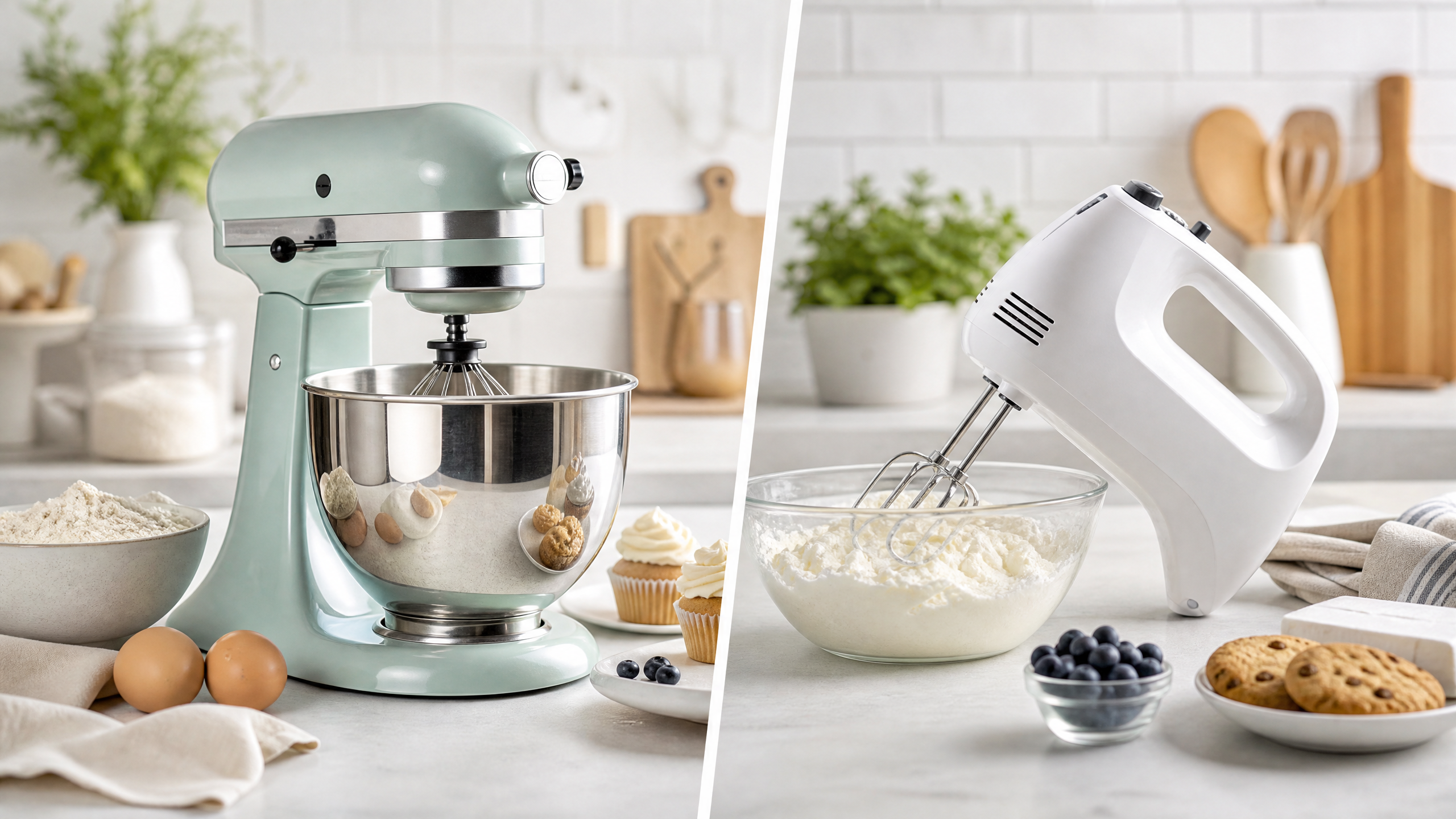
When you walk into a kitchen appliance aisle, the first question that pops up is often, “Do I really need a stand mixer, or will a hand mixer suffice?” The answer isn’t about one tool being universally better than the other; it’s about matching the mixer’s capabilities to the recipes you plan to make, the space you have, and how much cleanup you’re willing to tolerate. Below we break down the most relevant factors, bust a few common myths, and give you a practical framework for deciding which mixer fits your culinary ambitions. Check it out here.
As an Amazon Associate, we earn from qualifying purchases.
1. Power and Torque: The Heavy‑Duty Factor
For dough‑loving bakers, motor power is the decisive metric. A typical 5‑ to 7‑quart stand mixer runs on a 300‑ to 500‑watt motor that delivers sustained torque. This means it can churn stiff bread dough, pizza crust, or large batches of cookie batter for 10‑15 minutes without stalling. The planetary mixing action keeps the dough moving continuously, preventing motor overheating and eliminating the need to manually flip the bowl.
Hand mixers, even the most robust models, usually top out around 250 watts. Because the motor is held in your hand, the device can’t maintain the same steady torque for dense doughs. Most home cooks end up either flipping the bowl repeatedly or reaching for a food processor when the hand mixer gives out.
If you bake artisan loaves, bagels, or regularly bake in bulk, the stand mixer’s power advantage is a clear win.
2. Speed Range and Precision
Speed control matters when a recipe demands precise aeration. Hand mixers typically offer 5‑10 speed settings, which are more than enough for whipping cream or beating eggs. Stand mixers, on the other hand, often provide 12‑16 speeds plus a “low‑speed” setting below the first notch. This low‑speed mode is ideal for gentle folding of delicate batters such as soufflés or sponge cakes, while the high‑speed mode can whip meringues to stiff peaks in seconds.
For exacting desserts—think macarons, chiffon cakes, or any recipe that hinges on a specific texture—the incremental speed control of a stand mixer reduces trial‑and‑error. A low‑speed whisk can keep a meringue glossy, whereas a high‑speed whip can quickly turn it grainy.
3. Hands‑Free Operation and Multitasking
One of the most underrated benefits of a stand mixer is the ability to set it and walk away. Once the bowl and attachment are locked in place, your hands are free to measure dry ingredients, prep other components, or even sauté onions on the stovetop while the mixer does its job. This hands‑free operation not only speeds up the cooking process but also reduces wrist fatigue that can arise from holding a hand mixer for extended periods.
Hand mixers demand continuous manual guidance, limiting you to a single task at a time. If you’re preparing a multi‑step recipe, the ergonomic advantage of a stand mixer can be a game‑changer.
4. Attachments and Versatility
The modern stand mixer has evolved into a culinary platform. Beyond the standard paddle, flat beater, and dough hook, you can attach a meat grinder, pasta roller, spiralizer, ice‑cream maker, grain mill, and more. The KitchenAid stand mixer ecosystem alone supports dozens of third‑party accessories, turning one appliance into a multi‑tool workstation.
Hand mixers are limited to beaters and, occasionally, a whisk attachment. They cannot accommodate the larger mechanical add‑ons needed for pasta or grain processing. If you envision expanding into homemade sausage, fresh pasta, or even ice cream, the stand mixer’s attachment market—valued in the millions—offers a clear path without buying separate appliances.
5. Kitchen Footprint and Storage
The biggest drawback of a stand mixer is its size. A standard 5‑quart model occupies roughly 12–14 inches of countertop width, a similar depth, and needs about a 10‑inch height clearance. For small apartments or kitchens with limited counter space, this can feel imposing.
Hand mixers are compact—usually under 12 inches long—and can be tucked into a drawer. If space is at a premium, consider a compact 3‑quart “single‑serve” stand mixer as a compromise, though it still requires dedicated storage.
6. Cost vs. Value
Price alone does not guarantee quality. Premium brands like KitchenAid or Cuisinart are praised for durability, but mid‑range models from Hamilton Beach, Anova, or even certain Amazon Basics mixers can deliver comparable torque for most home‑cooking scenarios. The key is to compare motor wattage, speed range, and the availability of attachments rather than focusing solely on the price tag.
Common Misconceptions
- Myth 1: A hand mixer can replace a stand mixer for all dough work. Reality: The stand mixer’s continuous torque and fixed bowl are uniquely suited for high‑gluten, low‑hydration doughs.
- Myth 2: Stand mixers are only for bakers. Reality: They excel at savory tasks—making homemade sausage, grinding nuts for pesto, or whipping large batches of mayonnaise.
- Myth 3: Higher price always means better performance. Reality: Mid‑range models often provide sufficient power for most home cooks; premium models add durability and a broader accessory ecosystem.
Future‑Proofing Your Kitchen
Think of the stand mixer as an investment in culinary flexibility. It enables you to graduate from basic cake‑baking to artisan bread, fresh pasta, and specialty desserts without buying a new appliance for each skill. The ability to attach a grain mill, meat grinder, or ice‑cream maker transforms the mixer into a long‑term kitchen workhorse.
Conversely, a hand mixer serves as a starter kit. It handles everyday tasks—whipping cream, beating eggs, mixing pancake batter—while keeping your countertop uncluttered. If you’re still exploring your cooking interests or have tight space constraints, a hand mixer may be the most sensible first step.
Decision Framework
Use the following checklist to decide which mixer aligns with your needs:
- Recipe Focus: Do you plan to bake dense bread or make pasta? Choose a stand mixer.
- Space Availability: Do you have a dedicated countertop or storage spot? If not, a hand mixer or compact stand mixer may be better.
- Budget: Are you willing to invest in a platform that can grow with you? Stand mixers range from $200 to $500+; quality hand mixers are often under $100.
- Multitasking Needs: Do you frequently juggle multiple prep steps? Hands‑free operation favors a stand mixer.
- Attachment Appeal: Do you want to make sausage, spiralized veggies, or ice cream? Stand mixers win here.
Bottom Line
If you bake regularly, love experimenting with new cuisines, and have the countertop real estate, a stand mixer is a future‑proofing tool that will pay for itself in versatility and time saved. If your cooking routine is limited to light batters, occasional whipping, and you need to keep your kitchen lean, a hand mixer provides sufficient power without the footprint or price of a full‑size stand mixer.
Final Recommendation
Start with a clear assessment of your cooking goals. For most aspiring bakers and anyone eager to expand into savory projects, a 5‑quart stand mixer with a dough hook, paddle, and whisk attachment offers the best balance of power, precision, and expandability. If you’re just getting comfortable with mixing and have a modest kitchen, a reliable hand mixer is a perfectly adequate—and budget‑friendly—choice.